1st Mediology Research Network Conference – Call for paper
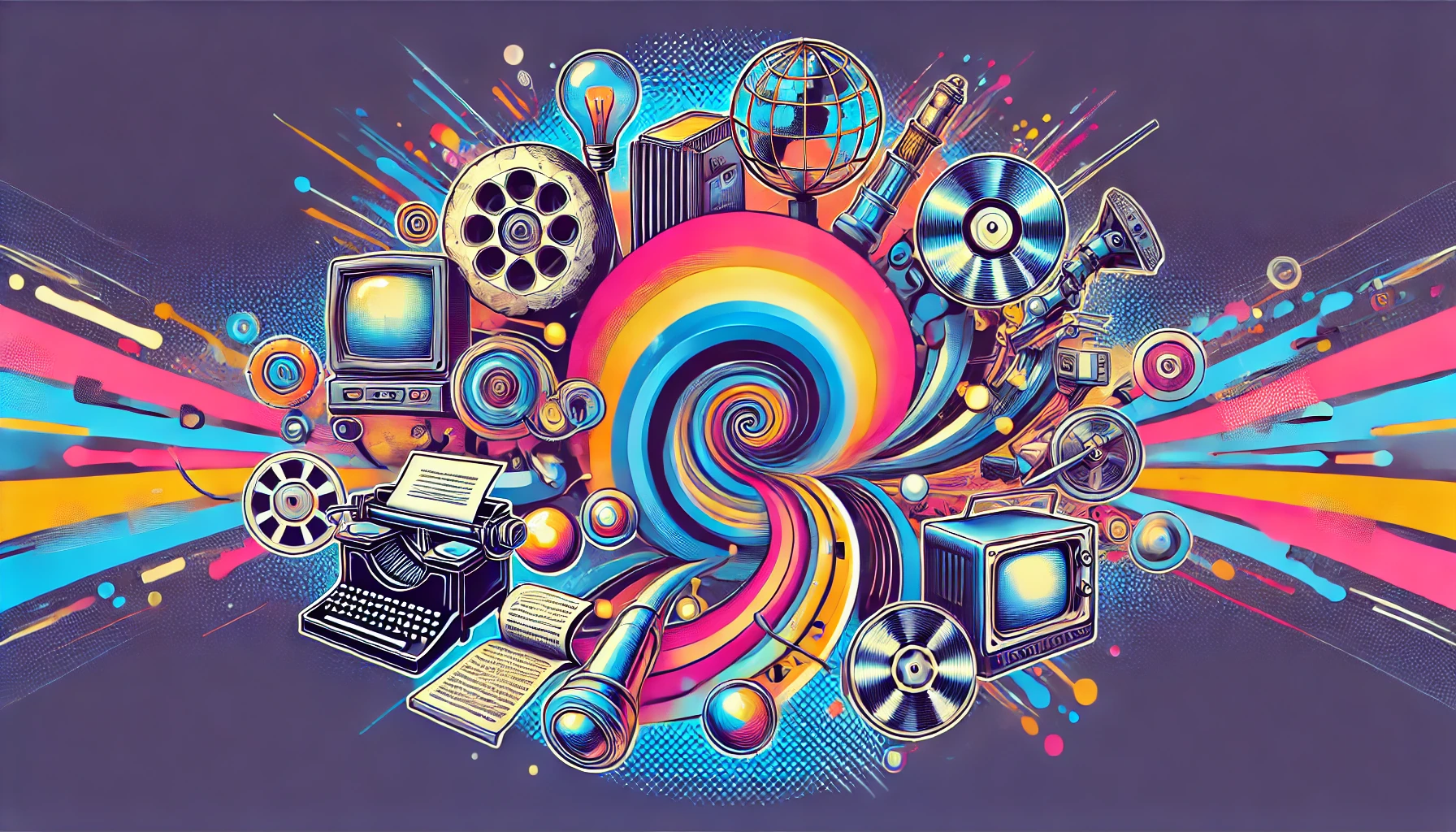
Re-Understanding Media. Communication and Imaginaries
Call for paper
We are pleased to announce the inaugural conference of the Mediology Research Network, dedicated to examining the critical role that media and mediations have played throughout history and continue to play in contemporary society.
Our aim is to investigate how media have been fundamental in shaping cultural and social processes, emphasizing the importance of mediology as a research perspective that addresses these issues across both short and long historical periods. By analyzing the interplay between media forms and societal dynamics, we hope to foster a deeper understanding of the transformative power of media.
Scholars are invited to submit papers that engage with these themes, offering insights that bridge historical context and contemporary analysis, and highlighting the enduring significance of media in our world.
The conference will be held online on 15 and 16 December 2025. Presentations may be delivered in English, Italian, French, and Spanish.
The program will be organized into five thematic sections:
Theory and History of Media
This section brings together two types of contributions.
First, we welcome theoretical reflections on the concept of medium and the nature of different media, with attention to the mutual influences among media, culture, and society.
Second, we invite research that investigates the role of media in historical processes, emphasizing the technological forms of communication. Due to its characteristics, this mediological approach to social history should engage in dialogue with explicitly theoretical perspectives, hopefully contributing to the development of mediological theory.
Media, Information, and Politics
This section explores the relationships between media forms and power, authority, and, more broadly, political institutions.
Contributions may focus on traditional media (press, radio, television) and new digital platforms in their interaction with the dynamics of politics and citizenship, including analyses of the organizational structures of the media themselves. In particular, we encourage reflections centered on the influence of different media forms on political communication, political organizations, and leadership styles.
Visual Arts, Performing Arts, and Creative Forms in Contemporary Media
This section investigates the field of visual arts, performing arts, and the broader range of creative practices.
We solicit contributions on the relationship between images and the media sphere, the redefinition of the roles of producer and consumer, and the new urgencies of sharing, archiving, and manipulating.
Equally, we welcome contributions that explore the relationships between performing arts and media logics, examining how these two domains intersect and influence one another. In particular, we invite proposals on artistic communication and the possibility of liveness, understood as the transformations of the sense of “being present” in our mediatized contemporary reality.
Media and Gender
This section focuses on the intersections between mediology and gender studies, paying particular attention to the role of media in the creation and transmission of related ideas and norms.
Submissions may explore how media actively influence gender identities, shaping their social perception through narratives, images, and cultural practices. Reflections on the power dynamics that determine which representations gain legitimacy and visibility in public and media spaces are also welcome.
Another area of specific interest concerns the impact of technological changes on identities, focusing on how digital platforms, social media, and artificial intelligence contribute to shaping individual and collective experiences of gender and sexuality.
Media Ecology and Emerging Media
This section explores the ecological dynamics of media and the impact of emerging media on contemporary society.
Preference is given to studies aimed at examining transmedia interrelations and their effects on the social and cultural environment, including theoretical reflections, case studies, and empirical research.
Proposals may focus on the transformation of everyday experiences through the use of online media and platforms, the effects of networked technologies on the perception of time and space, and the ethical and political implications of interaction with emerging media.
Please submit your proposals to mediologynetwork@gmail.com by 10 September 2025 30 September 2025. All submissions will be evaluated through a double-blind review process. The results of the evaluation will be communicated by 15 October 2025.
Abstracts should be sent as an e-mail attachment (400-600 words including title, author name(s), email address(es), and institutional affiliation(s)). Although we do not provide a template for the abstract submission, we expect abstracts that include a rationale, research question(s), theoretical and/or empirical methods applied, and potential results and implications.
Organizing Committee
- Alessio Ceccherelli – Link Campus University
- Ilenia Colonna – Università degli Studi del Salento
- Stefano Cristante – Università degli Studi del Salento
- Manolo Farci – Università degli Studi di Urbino Carlo Bo
- Giovanni Fiorentino – Università degli Studi della Tuscia
- Tatiana Mazali – Politecnico di Torino
- Massimiliano Panarari – Università degli Studi di Modena-Reggio Emilia
- Antonio Rafele – Sapienza Università di Roma
- Marcello Serra – Universidad Carlos III de Madrid
- Gabriella Taddeo – Università degli Studi di Torino
- Bianca Terracciano – Sapienza Università di Roma