Manifesto
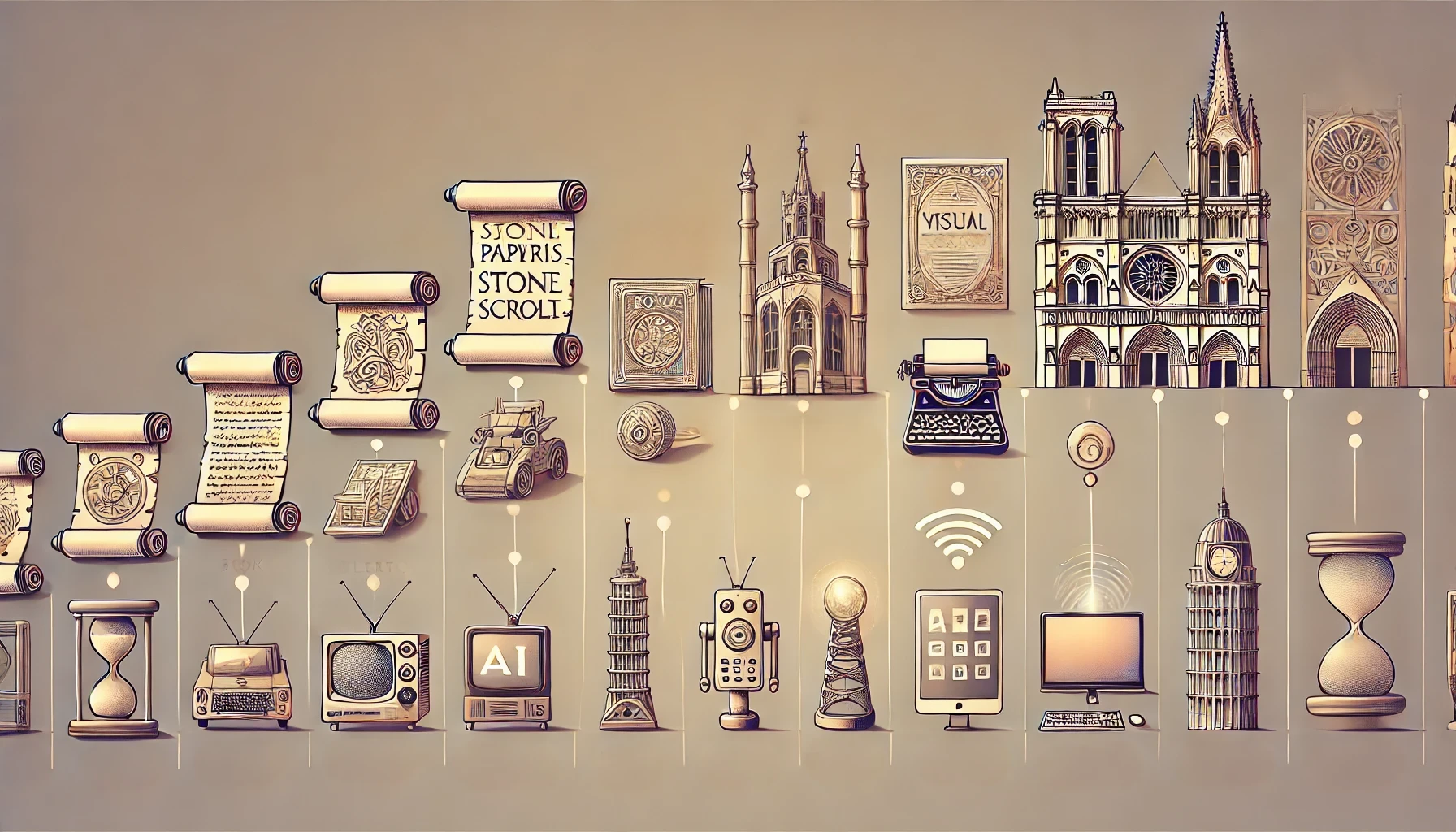
The mass media have existed for about two centuries, starting with the daily press and the telegraph. For about a century, the media have been studied by the social sciences and humanities, beginning with the advent of radio. Only in the last few decades have they become an area of study in university teaching.
The societies of the 20th century generated and simultaneously endured complex communicative environments, beginning with the press, cinema, and radio, and later including television in the latter half of the century, eventually leading to the web, its 2.0 forms, the world of platforms, and now the world of AI.
From the invention of newspapers to the present day, the media have been perceived differently depending on the climate of opinion – as prodigious inventions, instruments for controlling the masses, or countercultural devices. These varying perceptions have constantly shifted judgments regarding their dangers or innovative potential.
In the 1950s and 1960s, McLuhan investigated the galaxy that sprung from the movable-type printing press and delved into a comprehensive exploration of the media of his time. He was guided by the idea that the technological form of the medium (hybrid and metaphorical) affects its usage and, overall, the transformations of culture. In “Understanding Media” (1964), McLuhan explored the relationships between types of media, their definitions (high or low), and their strategic function in extending the body and mind of Homo sapiens. He also recognized the role of the arts in anticipating and signalling changes and conflicts within communicative environments increasingly inhabited by humans in daily life.
The question grows more complex and crucial every day: media are the environments through which we construct our idea of the world, not only in terms of events but also in how they are represented. The strategic relationship between media functionality and the continuous creation of imaginaries influences our individual and collective choices. These actions are, in turn, influenced by algorithms devised by powerful global digital corporations.
Re-understanding the media is the challenge we face today, requiring methodologies that allow us to attribute meaning to our studies and build bridges between all disciplinary fields interested in critically exploring contemporary media.
We believe that a broad international perspective enhances our understanding and provides opportunities to grasp phenomena that might be invisible in a more limited national context. Therefore, we propose that scholars interested in sharing research perspectives join an international mediology network. This network aims to foster the reconnaissance and circulation of knowledge on trends and theoretical approaches in Media Science at cultural, linguistic, and social levels. It includes studies on media development, the history of communication media and technological imaginaries, media environments of life, the most relevant theories and authors, mediological interpretations of cultural and artistic phenomena, and the media foundations of the hypermodern network society.